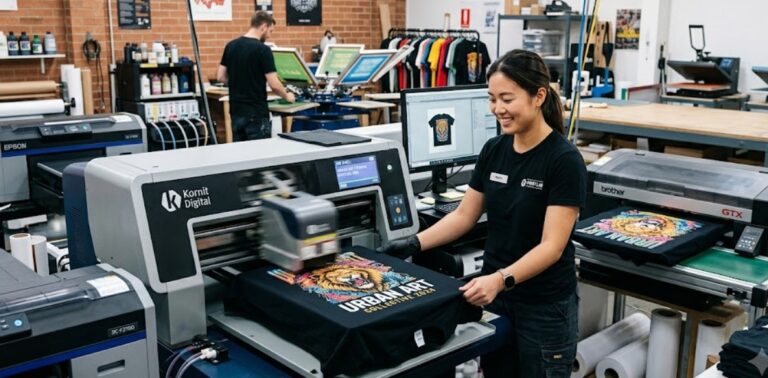
When you start a clothing brand, you have to handle a lot of newly printed apparel–and by that, we mean a lot. The tricky thing about apparel is that it can’t be handled as easily as you’d expect. Any damage, whether it’s a massive stain or a slight crease in the print, reflects on the quality of your overall brand. So, it’s essential to know how to care for printed t-shirts and other apparel as a clothing brand owner.
Luckily, if you’re in the clothing brand business, chances are good that you may be familiar with these methods already. General care tips for premium and luxury brands are well-known across the industry. But did you know that different printing methods require different care? Or what small things can end up hurting your prints over time?
How to Care for Printed T-Shirts
Here are a few tips on how to care for printed t-shirts in your own clothing brand:
Care based on the printing method

There are different printing methods for t-shirts, all with their lists of pros and cons. The five most common printing methods (which you can learn more about here) are Direct-to-Garment (DTG) Printing, Direct-to-Film (DTF) Printing, Screen Printing, Puff Printing, and Embroidery.
While caring for shirts printed with these methods share some things in common, you wouldn’t treat a DTG-printed t-shirt the same as a puff-printed t-shirt. Here’s a quick guideline for each type of print:
- DTG Prints: Don’t use harsh chemicals like softeners or bleach as they can mess with the ink. Use softer detergent and cold water, and dry by hanging in a cool place.
- DTF Prints: Similar to DTG prints, but be extra careful to use cooler water and cooler temperatures to avoid shrinking the fabric and scrambling the film. Hand washing is recommended.
- Screen Prints: Similar to DTG and DTF prints. Give the print some air while drying to set.
- Puff Prints: Keep in cold water when washing and avoid harsher chemicals. Turning the shirt inside out becomes important to maintain the texture of the puff print. Do not iron over the puff print, for obvious reasons.
- Embroidery: Embroidery stitches can loosen in a rough washing machine cycle, so keep it gentle under lukewarm or cold water. Air dry as soon as it’s finished.
You’ll notice there are some universal rules all of these printing methods need for care. General best practices tend to be thus–
Skip the bleach and fabric softeners
While bleach can be handy in removing stains, they’re also a very good way to wash off any beautiful prints you worked so hard on. Fabric softeners also have chemicals that can erode your prints over time, which makes them difficult to recommend.
Instead, stick to mild detergents to keep your printed shirts clean while maintaining their print integrity. If you’re washing a lot of clothes at once, don’t forget to sort them based on color to avoid any washed mixing.
Wash cold, not warm
Warm water has a similar effect to harsh chemicals, though at a slower pace. Washing clothes in warm water frequently can result in colors fading or mixing together in the wash, or the fabric itself getting stretched out and shrunken more easily over time. This is especially bad for DTF prints, as the change in fabric can crack prints quickly.
That being said, like bleach and fabric softeners, warm water has its uses. It’s the best way to wash off bigger stains and effectively sanitize any article of clothing you choose. However, if the goal is to keep your prints preserved, stick to cold washes. This is one of the essential ways to learn how to care for printed t-shirts.

Avoid dryers when possible
This tip is an extension of the cold, not warm water point. Dryers are known for their convenience, especially in colder countries where hang-drying often isn’t possible, but they come with their own fair share of risks. When it comes to learning how to care for printed t-shirts, they aren’t the best thing to use.
A study has shown that putting clothes in a dryer can shrink clothes by as much as twice their size and speed up the process of color bleeding. Through longer uses, it also decreases the integrity of the fabric itself, leading to lint and eventual wear and tear.
That being said, if you’re forced to use a dryer for business and convenience’s sake, use a low and slow tumble dry to decrease friction and issues for the fabric. Otherwise, hang your clothes or leave them down in a space to cool.
Turn shirts inside out
A lot of shirt prints get washed over by simple contact and friction in a washer. An easy fix to this is to simply turn shirts inside out when using a washer–this keeps the shirt’s print side away from running water, maintaining the overall effect.
This trick can be especially important for textured prints like puff prints and embroidery. Both prints tend to get caught in washer machinery or between other articles of clothing, which can lead to damage much worse than just erosion. Plus, turning shirts inside out also helps keep the color of 3D textures more vivid through longer periods.
Keep in cool spaces
You’ll likely get the impression by now that heat can damage fabric and ink quite a bit. When you’re finished washing, then, it’s important to keep printed t-shirts away from heat (i.e. sunlight or hot spaces) and in a cool, preferably dark space.
Typically, this usually comes in the form of organized racks or warehouses, but as long as it’s cool it’ll work.
Not sure if you have the equipment to properly care for your newly printed t-shirts? Inventory management can be one of the trickiest parts of owning a clothing brand–while it looks outwardly simple, a ruined or at-risk stock can lead to great risks for your brand’s future.
Some manufacturers will have space to keep your newly printed t-shirts for you. While learning how to care for printed t-shirts when selling is still essential, you can also trust them with reliable manufacturers. Shirtual’s merchandising services provide dedicated storage racks and space for all your clothing brand needs, and can even take care of worldwide distribution for your brand. Focus on growing your brand’s name–let us help take care of the rest.
GET IN TOUCH